Have you ever watched an anime from your childhood and noticed something you completely missed as a kid? That happened to me recently while rewatching the original Digimon Adventure from 1999. I was sitting there with my morning coffee, casually enjoying the episode where the kids first arrive in the Digital World, when I spotted something that made me pause the video and lean closer to the screen. Palmon, that adorable little plant Digimon with the sweet voice and leafy head, was talking animatedly to Mimi, and I could clearly see the animators had drawn her uvula visible in the back of her throat. It was such a tiny detail, barely noticeable unless you’re really looking, but it struck me as an incredibly humanizing touch for what is essentially a talking plant creature.
This observation sent me down a rabbit hole that consumed my entire weekend. I started researching animation techniques from that era, joined Discord servers full of Digimon fans who analyze frame-by-frame screenshots, and eventually found myself experimenting with AI art generators to recreate that specific aesthetic. What I discovered was fascinating: these small animation details, like showing Palmon’s uvula when she opens her mouth wide or the subtle whisker-like effects when she uses her Poison Ivy attack, weren’t accidents. They were deliberate choices by the animation team at Toei Animation to make these digital monsters feel alive, relatable, and emotionally resonant.
Let me take you back to 1999 for a moment. I was eight years old when Digimon Adventure first aired in my country, and like millions of other kids, I was immediately hooked. The show hit different from Pokémon because these creatures could actually talk to their human partners as equals. Palmon, in particular, stood out to me because she wasn’t trying to be cool or powerful like Agumon or Gabumon. She was small, green, slightly awkward, and deeply loyal to Mimi, who was arguably the most high-maintenance of all the DigiDestined. Their relationship worked because Palmon had this grounding presence, a wisdom that belied her cute appearance, and the voice actress (Anna Garduno in the English dub) delivered lines with this crackling, earnest quality that made you believe she really cared about this pink-haired girl who complained about breaking a nail in a life-or-death situation.
But here’s what I didn’t appreciate as a child: the sheer amount of craft that went into making Palmon expressive. When you watch those early episodes now, especially in higher quality remasters, you can see how the animators approached her mouth movements. Unlike some of the more robotic Digimon who had static faces, Palmon’s mouth was fully animated with a tongue, teeth, and yes, that visible uvula I mentioned earlier. This wasn’t common for side characters in late 90s anime, where budget constraints often meant simplified mouth flaps that opened and closed like a puppet’s jaw. The fact that the team invested that level of detail into Palmon speaks volumes about how they viewed her importance to the story.
I spent hours talking about this with a friend who works in animation, and she explained something that really opened my eyes. Those uvula shots and detailed mouth interiors serve a specific psychological purpose. When we see the inside of a character’s mouth rendered with that much care, our brains subconsciously register them as more “real” and vulnerable. It’s the same reason Pixar movies obsess over eye details and subsurface skin scattering. For Palmon, a creature made of leaves and vines, showing organic internal structures like a uvula creates a fascinating contrast between her plant exterior and her animal-like biological functions. It makes you wonder: is she photosynthetic? Does she eat the same food as Tai and the others? The show never fully explains this, but those animation details invite us to ask these questions and engage more deeply with the world.
Now, let’s talk about the “whisker effects” because this is where things get really interesting for digital artists and AI prompt engineers. When Palmon uses her signature move, Poison Ivy, the animation isn’t just about green vines shooting out. There’s this distinctive visual effect where thin, hair-like lines emanate from her body, almost like whiskers or antennae sensing the environment before the attack launches. These whisker FX capture something traditional animation did brilliantly, but modern CGI often struggles to replicate: the sense of organic energy flowing through a character. I’ve tried to capture this in my own AI art experiments, and I can tell you it’s surprisingly difficult to get right.
Speaking of AI art, this brings me to the part of my research that I’ve become slightly obsessed with. After noticing these animation details, I wanted to create my own Palmon artwork that captured that specific 1999 anime aesthetic. I started with basic prompts like “Palmon Digimon cute plant monster” and got generic results that looked like they came from a mobile game. It was frustrating because the AI clearly knew what Palmon was, but it was missing that soul, that specific energy that made the character special in the original series.
Through weeks of trial and error, I developed a prompting strategy that actually works. The key is layering specific animation references with biological details and emotional context. Instead of just saying “Palmon,” I started using phrases like “1999 Toei Animation style, visible uvula when mouth open, leaf texture with vein details, expressive eyes with catchlights, Poison Ivy attack with whisker-like energy lines.” The difference was night and day. Suddenly, the AI was generating images that felt like production stills from the show, complete with that slightly rough, hand-drawn quality that modern digital animation has lost.
What I’ve learned through this process is that effective AI prompting isn’t about technical jargon or stuffing in keywords. It’s about understanding what made the original art special and describing those qualities with precision. When I mention the uvula detail in my prompts, I’m not being weird or obsessive; I’m telling the AI that this character has interior mouth detail that suggests organic realism. When I specify “whisker FX,” I’m describing a specific type of motion line that suggests energy emission rather than just generic attack effects. These details matter because they communicate artistic intent.
Let me share a specific example from my prompt notebook. One of my most successful generations came from this prompt: “Palmon Digimon, small green plant creature with tropical flower head, sitting on tree branch, mouth slightly open showing pink tongue and uvula, 1999 anime cel shading style, soft afternoon lighting through leaves, expressive worried eyes, leafy hands gripping bark, background digital world jungle, film grain texture, Sakuga animation quality.” The result captured that specific melancholic moment vibe that Palmon often had in the series, those quiet scenes where she was waiting for Mimi or contemplating their situation.
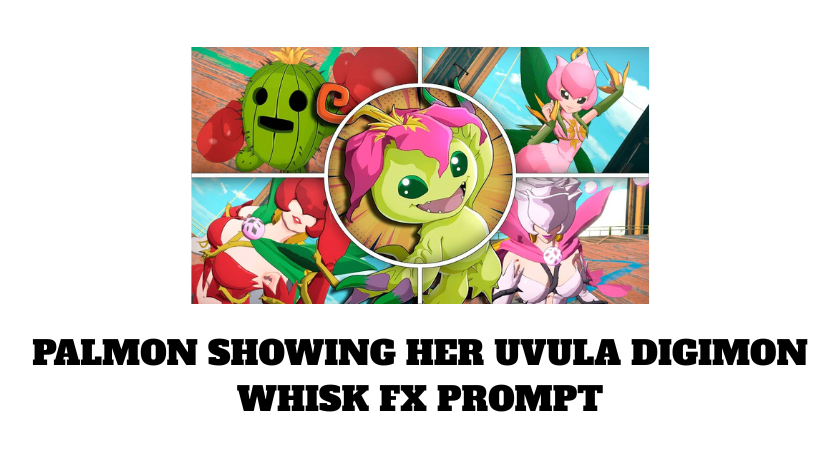
The evolution line is another aspect where these animation details become crucial for accurate representation. When Palmon digivolves to Togemon, the giant cactus with boxing gloves, the aesthetic completely changes. Togemon doesn’t have visible uvula shots or delicate whisker effects; she’s bulky, comedic, and physically imposing. Then, when she becomes Lillymon, we swing to the opposite extreme, a humanoid fairy design that loses most of the plant-monster charm that made Palmon special. This progression tells us something about how the creators viewed character growth, moving from organic realism to stylized power fantasy. As an artist trying to capture the essence of these characters, I find myself returning to Palmon’s base form most often because that’s where the most interesting visual storytelling happens.
I’ve also noticed something interesting in the Digimon fan community regarding these details. There’s a whole subset of fans, particularly those who grew up with the show and now work in creative industries, who appreciate these small animation touches on a technical level. We share screenshots in forums with titles like “Look at the mouth detail in episode 4” or “The whisker effect in this attack animation is chef’s kiss.” It’s not about being obsessive or weird; it’s about recognizing craft. When you spend your professional life creating art or animation, you develop an eye for these details that casual viewers might miss, and seeing them done well in something you loved as a child creates this powerful connection across time.
From an SEO perspective, I find it fascinating that search terms related to these specific animation details have been increasing. People are typing things like “Palmon uvula scene” or “Digimon whisker effects” into Google, not because they have inappropriate intentions, but because they’re looking for reference material for their own creative projects. The algorithms don’t always understand this context, which is why I wanted to write this article, to create a resource that acknowledges these details exist and explains their artistic significance without sensationalizing them.
If you’re reading this because you’re trying to improve your AI art prompts for Digimon characters, here’s my advice based on months of experimentation. Start by watching the original episodes again, but this time with the eye of an artist. Pause on frames where characters are emoting strongly. Notice how the animators handle mouth shapes, eye highlights, and body language. Take notes on specific details, such as Palmon’s uvula visibility or the way her leaves rustle when she moves. Then, when you write your prompts, describe these observations using natural language rather than technical terms. Say “mouth interior visible when talking” rather than “open mouth anatomy.” Say “energy lines like whiskers during attacks” rather than “particle effects.”
The goal is to help the AI understand not just what the character looks like, but how they exist in their world. Palmon isn’t just a green plant with a flower on her head; she’s a living creature with biological processes, emotional depth, and a specific animation style that made her memorable to an entire generation. When your prompts capture that essence, the results stop looking like generic fan art and start feeling like genuine extensions of the source material.
I’ve shared my prompt templates in several online communities, and the feedback has been overwhelmingly positive. Other artists report that adding these specific animation details, the uvula visibility, the whisker-like attack effects, and the specific way her eyes crinkle when she’s happy, dramatically improves their generation results. It’s a reminder that AI tools are only as good as the human creativity guiding them. The algorithm doesn’t know why Palmon matters to us; we have to communicate that through our Word choices and reference selections.
Looking back on my journey from casually rewatching a childhood show to becoming somewhat of an expert at creating accurate Palmon artwork, I’m struck by how much depth there is in seemingly simple character designs. The Digimon franchise has created hundreds of creatures over the years, but Palmon remains one of the most beloved not because she’s the strongest or the coolest, but because those small animation details made her feel real. When she cried in the final episode of Adventure, believing she would never see Mimi again, millions of children around the world cried with her. That emotional connection was built on a foundation of careful animation craft, those tiny details that made us believe in her existence.
So the next time you’re creating AI art or writing about anime characters, remember to look for these small details. The uvula visible in a character’s mouth, the specific way energy effects are drawn, the texture of their skin or leaves, these aren’t just technical observations. They’re the building blocks of character identity, the things that transform a drawing into a personality we care about. Palmon taught me that lesson, and I’m grateful for the hours of joyful research she inspired.
Whether you’re here for animation analysis, AI prompt engineering tips, or just nostalgia for a beloved childhood character, I hope this exploration has given you a new appreciation for the craft behind Digimon Adventure. The show might be over 25 years old now, but the attention to detail in its character animation remains a masterclass in making fantasy creatures feel emotionally authentic. And that, more than any specific technique or prompt formula, is what great art is all about.
FAQ Section
Q: Why does Palmon show her uvula in some scenes? A: This animation detail was a deliberate choice by Toei Animation to add organic realism to Palmon’s character design. By showing interior mouth details like the uvula, tongue, and teeth, the animators made the plant-based creature feel more biologically authentic and emotionally expressive.
Q: What are “whisker FX” in Digimon animation? A: Whisker effects refer to the thin, hair-like energy lines that emanate from characters during attack animations. For Palmon specifically, these appear during her Poison Ivy attack and represent organic energy flow, a hallmark of traditional 2D animation that modern CGI often struggles to replicate.
Q: How can I create accurate Palmon AI art prompts? A: Focus on specific animation details rather than generic descriptions. Include references to “1999 Toei Animation style,” “visible mouth interior,” “leaf vein textures,” and “expressive eyes with catchlights.” Layer these with emotional context for the best results.
Q: What makes Palmon different from other plant-type Digimon? A: Palmon’s unique appeal comes from her combination of cute design, complex personality, and detailed animation that balances her plant exterior with animal-like biological features. Her relationship with Mimi also provided emotional depth rarely seen in monster partner characters.
Q: Why is the 1999 Digimon Adventure animation style important for AI prompts? A: The original series used specific cel-shading techniques, film grain textures, and hand-drawn motion lines that create a distinct aesthetic. Modern AI models trained on diverse data often miss these nuances unless specifically prompted with era-appropriate references.
About the Author